The Thompson Valley Property (“TV” or the “Property”) is a claystone exploration target located in Arizona. Ameriwest has completed surveys and a Geological Field Plan of Operations to advance a drilling program, subject to minor permit requirements.
Reconnaissance geologic mapping and an initial surface sampling program resulted in the discovery of clays bearing significant concentrations (up to 1,295 ppm Li) and confirmed historic sampling values taken in the area in the 1960’s (per Company news Dec. 13, 2022).
Ameriwest believes the Property has potential to host a large claystone deposit found in a sub-horizontal sequence of lacustrine tuffs, mudstones, claystones, and siltstones.
Ameriwest has completed surveys and a Geological Field Plan of Operations to advance a drilling program, subject to minor permit requirements.
Click to Enlarge.
LOCATION & OWNERSHIP
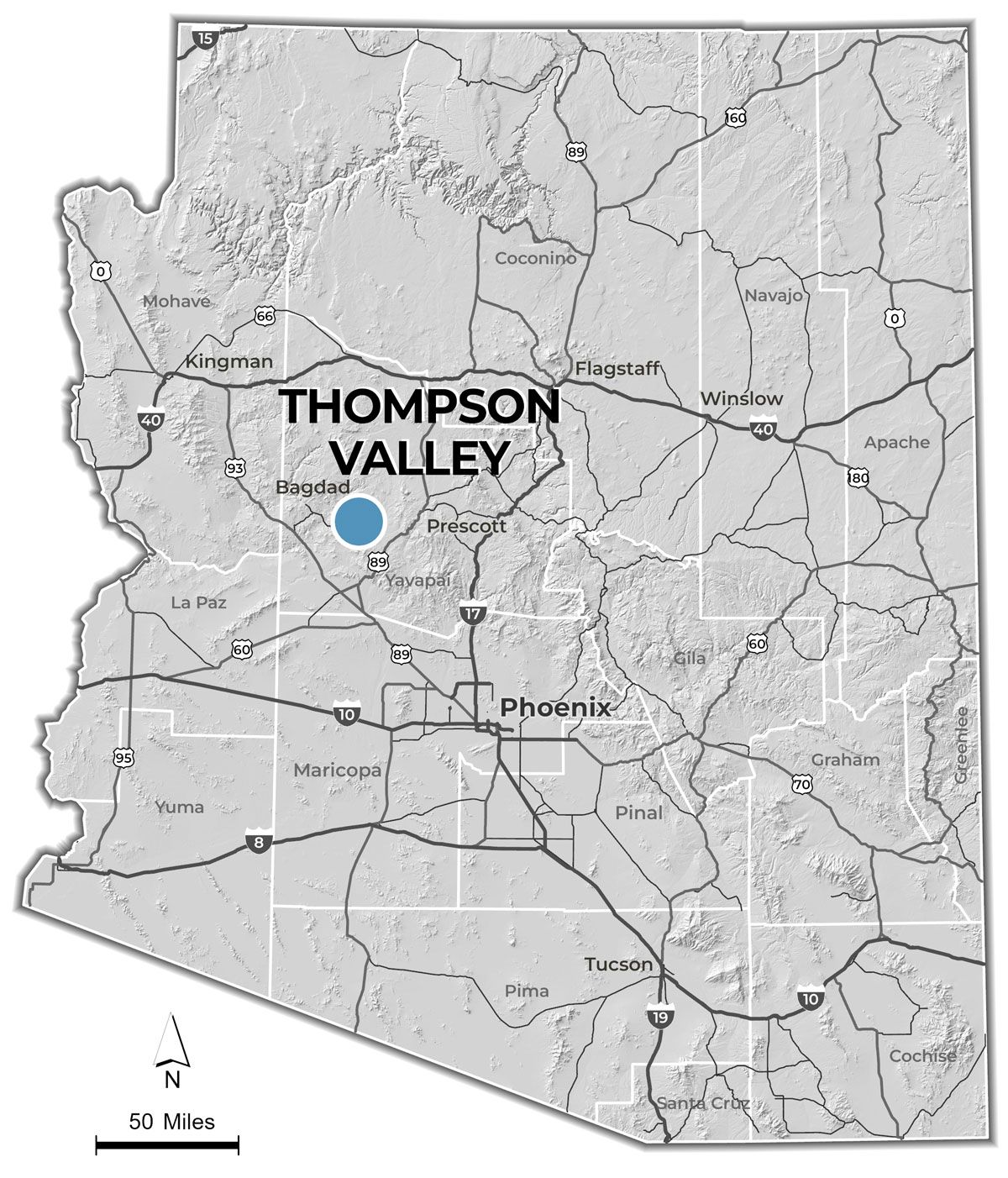
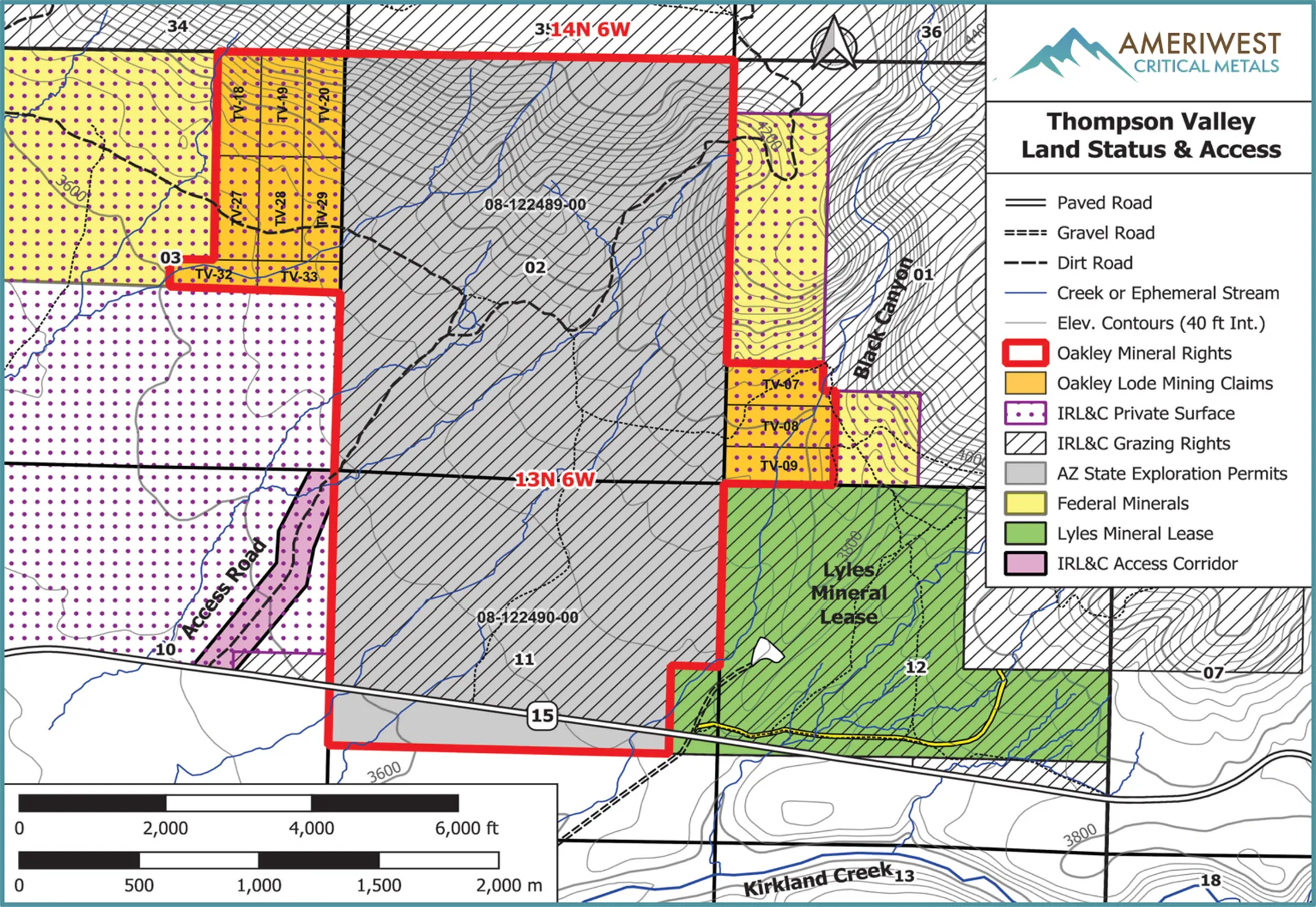
The Property is located 120 miles north of Phoenix, Arizona. The Company holds 2 mineral exploration permits with the Arizona State Land Department totalling 1,201 acres. In addition, the company holds 11 federal mining claims totalling about 201 acres. The total property size is about 1,402 acres.
Click to Enlarge
GEOLOGY
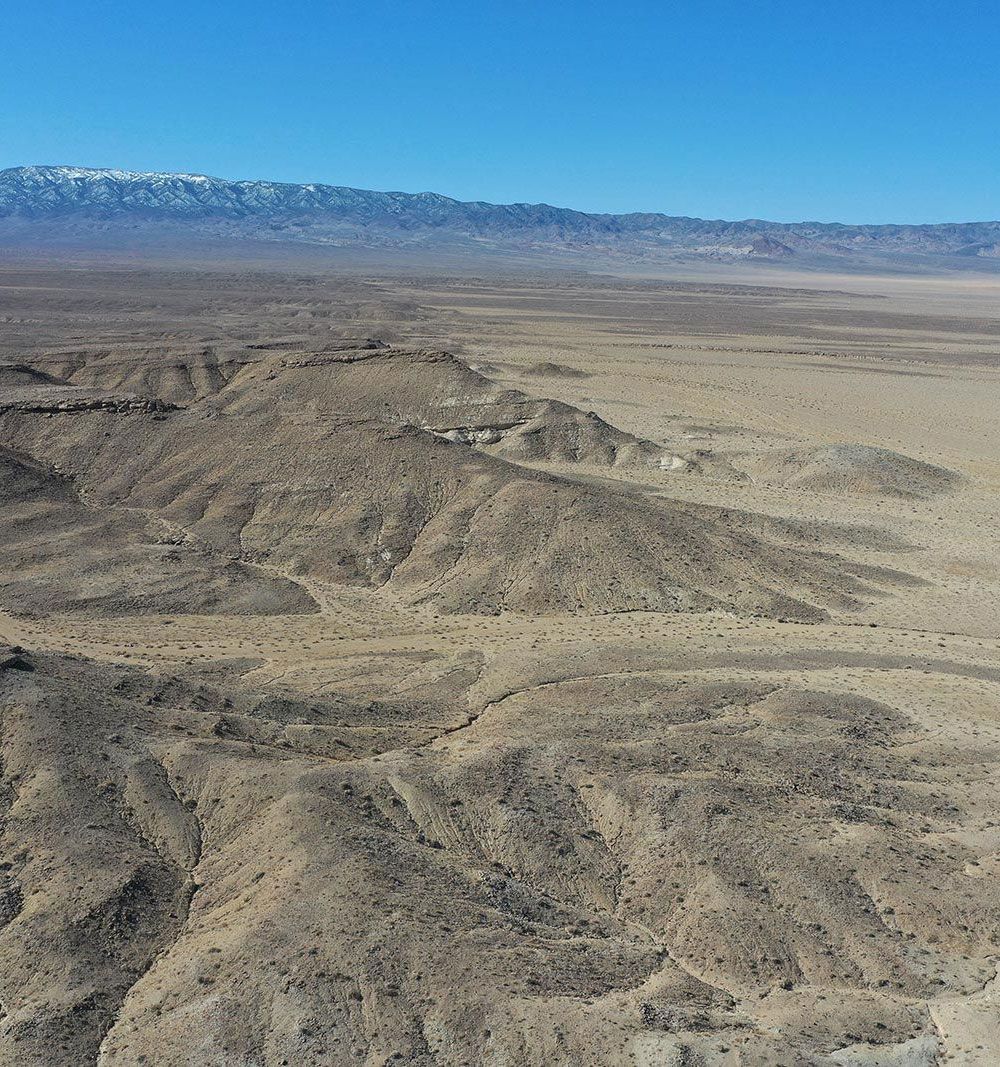
Surface clay deposits known as the “White Hills” were initially discovered in the region in the mid-1950’s and were known to contain bentonite and hectorite clays. Ameriwest’s claims cover a sequence of volcanic sedimentary rocks including layers of ash, clays, including silicic horizons.
Characteristics of Lithium Clay Deposits
The geological model and understanding of lithium claystone deposits is still evolving, and Ameriwest has improved its own understanding through boots-on-the-ground exploration. This field work has resulted in the discovery of Thompson Valley.
It is believed that “in place” volcanic sediments in the vicinity of volcanoes, in some cases, were hydrothermally altered and are characterised by higher grade concentrations of lithium. This could have been the result of geothermal water from volcanoes or associated vents, or from geothermal activity below the deposits. Lithium might have been mobilised by this hydrothermal activity and concentrated in various lithological units in the deposits. These types of deposits would typically be found in the mountains, adjacent to a valley.
Click to Enlarge
With regard to eroded or windblown material that infilled the valleys, several depositional models may be in play. Sources of lithium might have been from hot springs in the drainage basin with lithium concentrations building up over geologic time. There might have been geothermal activity from an intrusion below the basin providing lithium rich fluids over geologic time. There might have been numerous evaporation periods of lithium rich lakes in a lacustrine environment, that, over time, concentrated lithium in various aquifers in a valley. Or water from sources on the adjacent mountains could have flown on surface or as groundwater into the valley concentrating lithium in various aquifers. A combination or all of the above could have occurred.
MAPPING, SAMPLING, AND GEOPHYSICS
Ameriwest conducted geological mapping, geophysics, and surface sampling at Thompson Valley in 2022, which resulted in the discovery of significant concentrations of lithium. Assay results from 205 surface grab samples, analyzed by Paragon Geochemical (“Paragon”) in Sparks, Nevada, showed contents ranging from 2 to 1,295 ppm Li. From these samples, six main exploration target areas have been defined for follow-up exploration, covering an area of approximately 1,108 acres (see link to technical report below for additional details).
DRILLING
Ameriwest has not yet drilled on the Property. Historic drilling was done on the Property while exploring for clay deposits.The historical sampling was only done on a reconnaissance level and data is limited. The historical data does not meet NI 43-101 or CIM Mineral Exploration Best Practices Guidelines. The drilling does, however, provide some geologic and structural information.
EXPLORATION TARGET
A NI 43-101 Technical Report has been completed, and it identifies six exploration targets with potential to host 200-400 million tonnes of deposits, with expected average grade of these deposits ranging from 114 to 842 ppm Li.
NEXT STEPS
The company is currently at the pre-drilling phase. Ameriwest has completed surveys and a Geological Field Plan of Operations to advance a drilling program, subject to minor permit requirements.